Driving the South Coast
The classic Iceland day runs 180 kilometers each way: two great waterfalls, a glacier tongue, and the black beach whose waves kill the careless. The scenery is free; the respect is mandatory.
The short version
- The day runs Route 1 southeast: Seljalandsfoss (~1h45 from the city), Skógafoss (+30 min), the Reynisfjara turn and Vík (+45 more) — roughly 180 km each way before a single stop, which is the alarm’s plain warning about the odometer.
- Reynisfjara’s basalt columns and black sand come with the coast’s serious rule: sneaker waves surge far up the beach without warning and have swept visitors to their deaths — obey the posted danger zones and the warning-light system, and keep the alarm’s never-turn-your-back line as law; conditions and alerts at safetravel.is.
- Seljalandsfoss drops 60 meters with a path behind the curtain — full rain gear or full soaking, and the walkway ices shut in winter; the quieter Gljúfrabúi hides in its canyon slot a few hundred meters north.
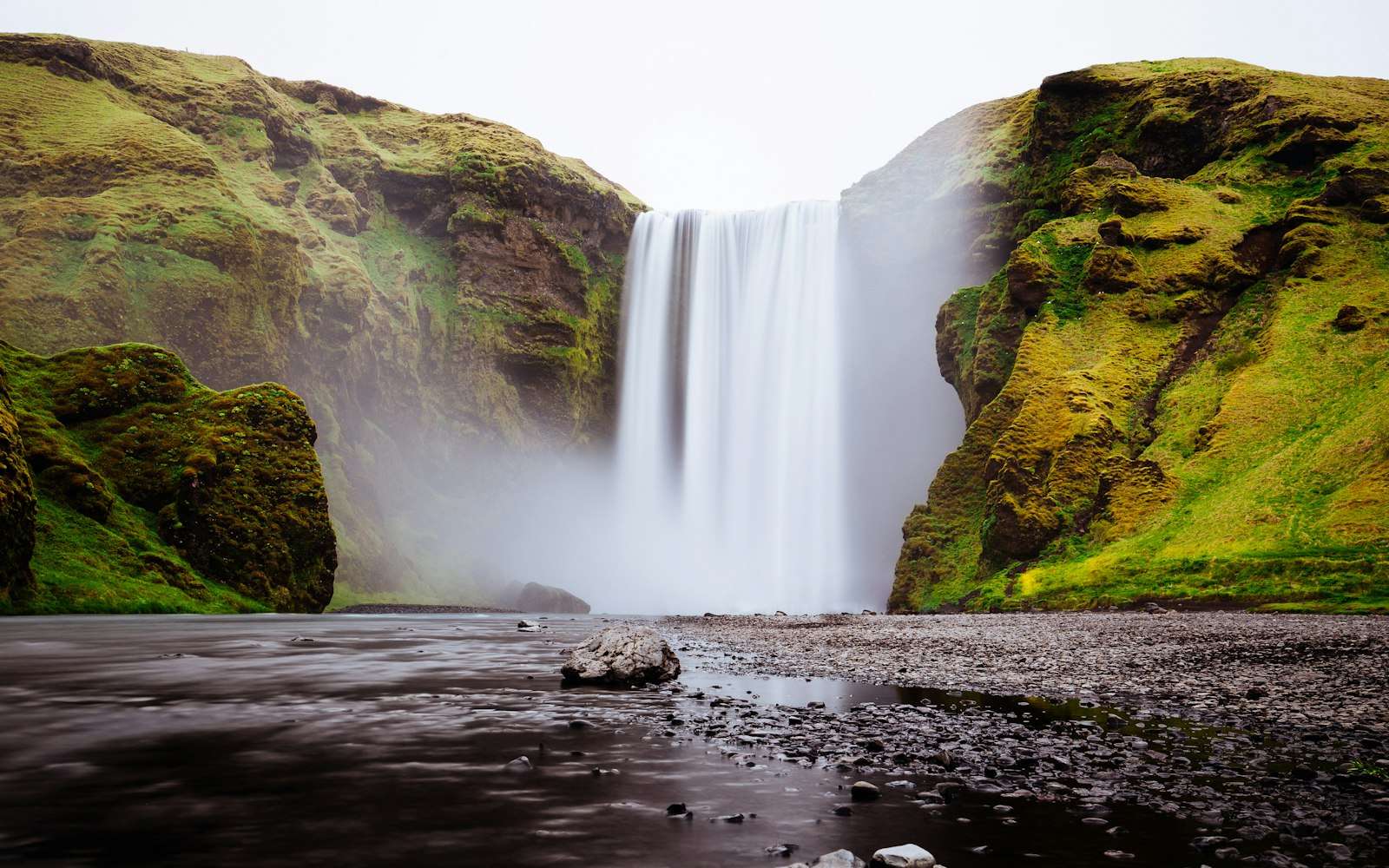
- Skógafoss delivers the coast’s power shot — 25 meters wide, rainbow-prone — with the staircase to the top adding the river-plateau view for 500 steps of effort.
- Sólheimajökull’s glacier tongue sits minutes off the road between the falls — walkable to the viewing area unguided, onto the ice only with a booked guided walk, crampons included.
- Winter reshapes everything: December’s four-to-five daylight hours compress the day to the core stops, road and weather closures answer to road.is, and the tours’ professional drivers become the wiser choice for anyone unpracticed on ice.

Getting there
Self-drive gives the stops their proper sovereignty: Route 1 runs paved and plain the whole way, parking fees at the falls are card-payable, and fuel discipline starts at the city limits per the alarm. The counter-argument is seasonal — winter’s ice, wind advisories, and short light make the coach and minibus tours (which run this exact circuit daily) the better seat for many, trading stop-control for a professional at the wheel. Either way, the pre-departure ritual is fixed: safetravel.is, road.is, and the fuel gauge, in that order.
The day
Take the stops in road order and budget backward from daylight. Seljalandsfoss first — the behind-the-falls loop early, before the spray meets the crowds — with Gljúfrabúi’s hidden chamber for those willing to boulder-hop a stream. Skógafoss next: the base shot, the staircase if legs vote yes, and the skyr stands of the roadside services. Sólheimajökull’s tongue makes the glacier stop — viewing area freely, ice only under guides. Then Reynisfjara under the alarm’s full authority: photograph the stacks from the safe zones, watch the water like the locals do, and leave the surf line to the ocean that runs it. Vík’s church-on-the-hill and lupine flats (in season) close the outbound leg; Dyrhólaey’s arch adds puffin cliffs May–August when the nesting closure allows. The return runs the same road with the light behind you — the day’s quiet second showing.
When to go
June through September gives the daylight to do everything at full length, plus lupines, puffins, and midnight-sun margins for error. Winter offers the falls in ice armor and aurora odds on the drive home — at the price of compressed hours, live weather rules, and the alarm’s tightened math; the core-stops version (both falls, the beach done carefully) is winter’s realistic itinerary. Shoulder months trade crowds for wind. In every season, Reynisfjara’s rules are identical, because the ocean doesn’t read the calendar.
Frequently Asked Questions
Are the sneaker waves really that dangerous?
Yes — they arrive without pattern, reach far beyond the visible wet sand, and the undertow on that steeply-shelving beach has drowned visitors in ordinary-looking conditions. The zone system and warning lights exist because of real deaths. Stay high, stay watching, and the beach is safely magnificent.
Self-drive or tour, honestly?
Summer with driving confidence: self-drive, for stop sovereignty. Winter, or any hesitation about ice and wind: tour, without a second thought — the guides run this road daily and the coach windows carry the same scenery. The alarm’s condition-check rule governs both.
Is the plane wreck worth it?
The DC-3 on Sólheimasandur demands a flat 45-minute walk each way across black gravel from its car park — a stark photograph at a 90-minute-plus cost. Commit or skip cleanly; squeezing it wrecks the day’s arithmetic.
Can I extend to the glacier lagoon?
Jökulsárlón sits another 190 km beyond Vík — a different, longer day (or an overnight) rather than an extension. This network’s standing boundary: the south coast to Vík is the day trip; the lagoon is the reason to book a night out east.
What should I wear?
Waterproof everything for Seljalandsfoss, windproof everything for the beach, and layers under both — the coast manufactures its own weather hourly. Real shoes minimum; the staircase and stream-hops punish fashion.